
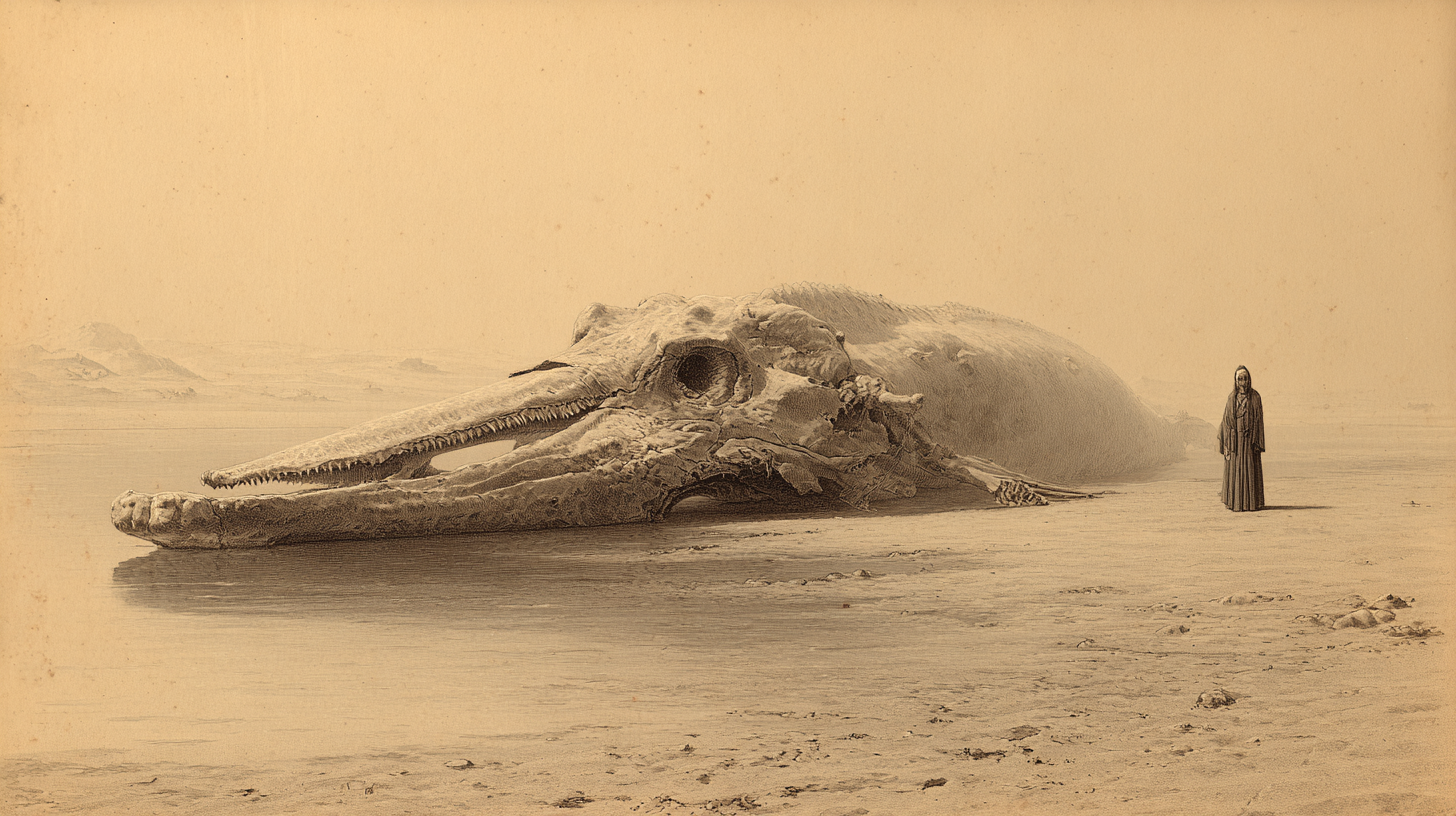
Ambergris: The Government of an Unknown Substance
On Ambergris and the mastery of its uncertainty.
Written by: Adill Ali. Read time 25mins.
Abstract
For roughly a thousand years ambergris was among the most valued materials in the Islamicate world, even though its nature remained unsettled for most of that period. The systems that grew around it were nonetheless elaborate. Merchants graded it by provenance and colour, jurists ruled on its purity and on the fifth due when a piece was found, physicians prescribed it within the humoral pharmacopoeia, and courts used it to mark sovereignty through perfume, ceremony, and gift. This essay follows ambergris from the Arabian coast at al-Shiḥr, which gave the benchmark grade its name, through the law of windfall, the courts in which it became a sign of rule, the workshops in which it bound the great compound perfumes, and finally to the modern shore, where its legal and ethical status remains contested. The argument is that the institutions built around ambergris were not expressions of mastery over it, but responses to the absence of such mastery. The substance could not be cultivated, manufactured, or reliably located; it could only be received. Its history shows how elaborate systems of value can arise precisely where productive control is most absent.
I. The Piece on the Table
The piece of white ambergris on the table in front of me cannot be dated. It is light, far lighter than its size suggests, and it breaks apart under slight pressure. The texture is waxy. Rubbed between the fingers it softens and leaves a smoothness on the skin that outlasts the handling, an almost emollient residue with no obvious name. Held to the nose it is dry and saline, faintly sweet, with a sharp edge that turns, at its furthest reach, towards something citric. It does not smell faecal. The faecal note belongs to the dark, fresh material; this pale grade has had it weathered out. One further property is worth recording at the outset, because the rest of this essay turns on it. Set any grade of ambergris to heat, the white included, and it melts to an oil that runs dark. The colour of a finished piece is not the colour of the substance. It is the record of the substance's age, a surface that years of salt and sun have laid over a darkness that heat brings back.
That a substance can be examined this closely and still resist dating is the smaller version of a much larger fact. For roughly a thousand years ambergris was among the most valued materials in the Islamicate world, and for almost the whole of that period there was no settled, demonstrable account of what it was. Theories abounded, and some of them guessed at the truth, but none could be shown to be correct: where the substance came from, how it formed, by what process it arrived on a shore, were questions to which the period had many answers and no proof. The systems built around it were nonetheless elaborate and serious. Merchants graded it by provenance and colour and priced it against gold. Jurists ruled on its purity and its lawful use, and on the tax owed when a piece was found. Physicians assigned it humoral properties and a place in the pharmacopoeia. Caliphs were anointed with it and had it scattered at their weddings. A civilisation did all of this to a substance whose nature it could not settle.
This is the argument the material itself proposes. The institutions that grew up around ambergris, commercial, legal, medical, and ceremonial, were in large part a response to the substance's resistance to knowledge and to control. It could not be manufactured, cultivated, or reliably located. It could only be received. A society achieved every kind of mastery over ambergris except the one that would have mattered, which was the power to produce it or to find it at will, and it was precisely where that power was most absent that the institutions grew most developed. To follow ambergris from the coast where it entered the trade to the courts where it was exalted is to watch a culture do the work it does when it is handed something it cannot make and must nevertheless account for.
II. The Word, the Whale, and the Question of Origin
The history begins with a word that could not keep its referents straight. The Arabic ʿanbar (عنبر) reached Arabic through Middle Persian and passed out of it into the languages of Europe: medieval Latin took it as ambar, Old French as ambre, and Middle English adopted it in the fourteenth century as amber, where it denoted the grey marine substance (Mottahedeh 1985). The word later attached itself to the fossil resin, the yellow stone that holds insects, and the two senses had to be prised apart. The marine substance became grey amber, ambre gris, ambergris, while the bare word settled on the resin. The confusion ran in both directions and was old: the medieval Arabic authorities sometimes classed the fossil resin, kahrubā (كهرباء), as a variety of ʿanbar (Mottahedeh 1985). The name of the substance is, before anything else, a record of misidentification, a single term stretched across two unrelated things until use forced a correction.
A deeper ambiguity sits inside the Arabic term and reaches further into the problem. The ordinary Arabic word for a whale or great sea-creature is ḥūt (حوت), the word the Qur'an uses for the creature that swallowed Yūnus. ʿanbar is something else: a name that belongs at once to a particular sea-creature and to the substance, attached to both without distinguishing them. This is the reason the most frequently cited text in which the word appears has so often been misread.
In the expedition remembered as the Army of the Foliage, the Jaysh al-Khabaṭ, recorded in the Ṣaḥīḥ of al-Bukhārī (4361–62; also 5493–94), a detachment under Abū ʿUbayda was reduced by hunger on the coast to eating the leaves of the trees, until the sea cast up a dead creature larger than any the men had seen. They lived on it for half a month and rubbed themselves with its fat, and Abū ʿUbayda raised one of its ribs as an arch beneath which a mounted rider passed without stooping. The creature is named al-ʿanbar. On the detachment's return the Prophet ﷺ described it as provision that God had brought out for them, and ate of what they brought.
The narration is sometimes adduced as a scriptural warrant for the perfume. It is nothing of the kind. In this report al-ʿanbar names the great dead sea-creature cast up by the water, the carcass on which the men fed and whose ribs formed the arch, and not the aromatic substance; the same account, transmitted by al-Bayhaqī, calls the creature a ḥūt, a whale, and supplies ʿanbar only as the name it went by. The text concerns the lawfulness of eating what the sea casts up, not the use of the aromatic. What it does establish, and what proves more durable than any single ruling, is narrower. The Arabic word joined the animal to the secretion in one term long before any observer could show that the one produced the other, and for most of the substance's recorded history that connection was unknown. The language had registered a relationship it could not demonstrate. And the verb that governs the episode is the verb that governs the substance throughout its history: the sea casts it up. Ambergris is not procured. It arrives, or it does not.
What it was thought to be, in the absence of any way of finding out, was almost everything. It was held to be a spring rising from the floor of the sea, a fungus that grew on the seabed and broke away, the droppings of a sea bird, a gum exuded by submarine trees, or sea foam hardened by the sun. Al-Masʿūdī, who sailed the Indian Ocean in the tenth century and whose account of aromatics in the Murūj al-dhahab was copied into later works for centuries (King 2017, 7), recorded the belief of merchants and sailors that the substance grew like a fungus on the seabed and was thrown up by storms. The Persian inheritance carried an older account still. In the Zoroastrian cosmology of the Pahlavi Bundahišn (24.21), ambergris is the dung of the three-legged ass that stands in the midst of the ocean and whose urine purifies the seas (Mottahedeh 1985). The Chinese tradition arrived independently at a structurally identical myth, naming the substance lóngxiánxiāng, dragon's-drool fragrance, and imagining dragons that slept on coastal rocks and drooled into the sea. Three traditions, three theories that an unidentifiable marine substance must be the excretion of some great beast, and no means of choosing between them.
The choice was not available to anyone using the methods available. A settled answer came only with the modern period, through the dissection of sperm whales and the chemistry of the nineteenth and twentieth centuries. Ambergris is principally associated with the sperm whale, in whose digestive tract it forms around the indigestible beaks of the squid on which the whale feeds, though some accounts allow that the pygmy and dwarf sperm whales may produce it in smaller amounts. It is eventually expelled or released from the animal, by a mechanism that remains debated, and is then altered by long exposure to sea water, air, and sunlight as it drifts, often for years, before reaching a shore (Kemp 2012). In Kemp's account only sperm whales produce it, and only about one in a hundred of them, which is part of why the substance is rare and why its arrival cannot be predicted (Kemp 2012).
The chemistry then explains a property the connoisseurs had described for a thousand years without being able to account for. The substance's principal constituent, the triterpene alcohol ambrein, isolated by Ružička and Lardon in 1946, is very nearly odourless on its own. The scent of ambergris is produced by the breakdown of ambrein, under exactly the sun and salt and air that whiten an aged piece, into the smaller compounds, ambroxide chief among them, that carry the odour. The smell is an index of decomposition. The pale colour and the developed fragrance of a fine piece are two registers of a single process: a thing slowly undone into what it is worth. This is the literal sense of the observation that one can smell the age of a piece of white ambergris. The age is the only thing there is to smell. And it is the reason the synthetic that now stands in for the natural material across most of the perfume industry, an ambroxide produced from sclareol derived from clary sage rather than from whales, reproduces in effect the substance's old age, the oxidised end state, without the years of weathering that the natural material requires. The one thing the modern world has learned to manufacture is not ambergris but its senescence.
III. The Coast of al-Shiḥr and the Grading of a Surface
The substance entered the trade from a particular and improbable place, and the place is worth dwelling on because it sets the pattern for everything that follows. The benchmark grade of the classical period was ʿanbar shiḥrī (عنبر شحري), named for al-Shiḥr, a walled town on the Hadramawt coast of southern Arabia. Al-Shiḥr had an anchorage but no docks, and its other principal export was fish oil. The standard against which the entire Islamicate world measured its ambergris took its name from one of the poorer ports on the Arabian shore. Al-Masʿūdī, in the Murūj al-dhahab, lists the five principal aromatics as musk, camphor, aloeswood, ambergris, and saffron, and records that all came from India except saffron and ambergris, which came from the country of the Zanj, from al-Shiḥr, and from al-Andalus; King, surveying the trade, notes that the ambergris of al-Shiḥr on the southern coast of Arabia was especially regarded (King 2017, 62). She ranks ambergris the second most important aromatic in early medieval Islamicate perfumery after musk, and describes it as a famous product of the Indian Ocean whose supply was, in her phrase, literally dependent on the winds and tides (King 2017, 61).
That dependence shaped how the substance was graded, and the grading is the clearest evidence for the argument of this essay. Lacking any knowledge of what ambergris was, the trade classified it by what the hand and the eye could register: where it came from, what colour it showed, how oily it felt. The difficulty, which the sources do not resolve and which it would be dishonest to smooth over, is that they do not agree on which signs indicate quality, or even on which direction the substance changes as it ages. The modern perfume trade and the field collectors who supply it hold that fresh ambergris is dark, soft, and faecal, the least valued state, and that long weathering in the sea lightens it through grey to white, hardening and drying it and refining its odour, so that the palest grade is the oldest and the most prized (Kemp 2012). The medieval medical authorities recorded almost the reverse hierarchy. According to the Encyclopædia Iranica, drawing on the medical texts, the best ambergris was described as yellowish-grey and unstreaked, while the inferior varieties, those excreted by the whale and found floating in the water, were black and streaked (Mottahedeh 1985). The modern trade prizes precisely what has floated longest, the pale and oxidised material that the sea has had years to work on; the medieval physicians appear to have rated the freshly voided and floating material low, and to have made grey rather than white the ideal. A nineteenth-century European medical note, for its part, prized ambergris that was bright grey streaked with black and yellow, making streaking a mark of quality where the medieval authorities had made unstreaked the ideal.
Three traditions, then, and three incompatible answers to the question of what good ambergris looks like. The disagreement is not a defect in the record. It is the strongest possible evidence that the grading of ambergris was always a reading of surfaces, undertaken by people who had no access to the thing beneath the surface, and that what counted as the finest grade could therefore drift across centuries and cultures while the substance itself stayed exactly what it was. The point can be put more sharply. What counted as the best ambergris changed from age to age and culture to culture, while the difficulty underneath stayed exactly where it was, which is only intelligible once one accepts that the standard was never anchored in knowledge of the substance.
The trade that carried these contested grades ran along a coast that was fought over for the whole of the medieval period. Possession of al-Shiḥr passed among a succession of powers, the Ziyadids, the Rasulids, the Tahirids, and the coastal sultanates, for each of whom the port was a prize of commerce. Among them were the Kathiris, whose seat lay at Seiyun, deep in the interior of the Wadi Hadramawt; theirs was a power of irrigated agriculture and inland caravans rather than a maritime state, yet they reached repeatedly for the coast, taking al-Shiḥr in the 1460s and holding it intermittently, a Kathiri sultan seizing the town and its fort again as late as 1866. Control of the littoral passed in the end to the Qu'aitis. What is striking across this long contest is that none of the dynasties that bled for the port left anything as durable as the reputation of the substance the sea deposited on its shore. The polities rose and fell; the grade name, ʿanbar shiḥrī, outlasted every flag that flew over the fort. The standing of the material proved more permanent than any structure raised to control it, which is the argument of this essay in miniature: men fought and died for the harbour, and the sea kept its own counsel about when it would deliver.
IV. The Law of a Windfall
Before ambergris could be sold across the Muslim world, anointed onto a caliph, or folded into a dish, it had to be lawful, and its lawfulness could not be settled without first settling what it was. The legal question was therefore acute in exactly the way the commercial one was. If the substance were the product of an animal, its purity and its permissibility were in doubt; and the jurists had no more access than the merchants to the fact of its origin.
What the law did with this difficulty is recorded, among other places, in the treatise of the fifteenth-century polymath al-Suyūṭī on the chief aromatics, translated by van Gelder. Al-Suyūṭī transmits the position of Ibn ʿAbbās, the Prophet's cousin and one of the most cited early authorities, who was asked about the due owed on ambergris and answered that it is only something the sea throws up, and that if it is found, a fifth is due to the public treasury (al-Suyūṭī, trans. van Gelder 2024, 202). The ruling is quietly revealing. The fifth, the khums, is the levy on found and unearned wealth, on treasure and on what is taken without cultivation or purchase; it is not the ordinary alms due on managed property or mined produce. To assign it to ambergris is to place the substance among windfalls, the things that arrive without labour, rather than among the goods a person works to produce. The legal literature thereby preserves the central fact about ambergris in the most durable form available to a culture, by building it into the structure of an obligation: this is a thing that comes from outside human effort, and the law treats it accordingly.
The same treatise gives ambergris its prophetic and paradisal associations, and it is worth stating precisely, because the careless route runs through the Jaysh al-Khabaṭ hadith, which as we have seen is about the whale and not the perfume. Al-Suyūṭī cites al-Bukhārī's Taʾrīkh for the report that ʿĀʾisha, asked whether the Prophet used perfume, answered that he used the masculine perfumes, musk and ambergris, and he transmits as authentic the tradition that ambergris is the earth of Paradise (al-Suyūṭī, trans. van Gelder 2024, 202). These are al-Suyūṭī's transmissions of earlier authorities, and they are cited here as such; the grading of their chains is a matter for the hadith scholars and not for an essay on a perfume.
How the jurists handled an aromatic of bodily or animal origin can be seen most clearly in the parallel case of musk, which King reconstructs in detail. Blood is unlawful; musk was understood to derive from the blood of the musk deer; and the apparent contradiction had to be resolved in the codification of the law. The accepted resolution was that musk is blood transformed, and hence no longer blood, an explanation so compelling that it passed into Sufi literature as a metaphor for the way God transforms the life of the believer (King 2017, 218). Musk taken from a lawful animal while it was alive was pure; the so-called musk of the rodent was impure, because the animal itself was impure (King 2017, 164). The law, in other words, possessed a developed apparatus for deciding the purity of an animal-derived aromatic. Ambergris was the harder case, because where musk's origin was merely contested, ambergris's was unknown, and the law met that deeper uncertainty not by pretending to resolve it but by filing the substance among the things the sea simply gives.
V. The Substance of Sovereignty
The substance that the law classed as an unearned gift of the sea became, in the hands of the courts, the very mark of sovereignty, and the documentary record for this is older and richer than the Ottoman ceremonial with which it is usually associated. King assembles the evidence across the pre-Islamic and early Islamic Near East. Al-Aṣmaʿī records that ʿAbd al-Muṭṭalib, visiting the last ruler of Yemen, Sayf b. Dhī Yazan, found him perfumed with ambergris and musk from head to foot. A visitor to the Ghassānid court in the early seventh century described King Jabalah daubed with ambergris and musk from vessels of silver and gold. The Sasanian Khusraw received musk and ambergris from his governor in Yemen, and the throne room of the Ghaznavids displayed camphor, musk, aloeswood, and ambergris (King 2017, 338–39). The association is consistent across dynasties that shared little else: to be a king was, among other things, to smell of ambergris.
The logic beneath the practice is set out in the Kitāb al-Tāj attributed to al-Jāḥiẓ, which states that a king's retinue and boon companions do not share in the application of perfume or in being censed, because to do so would raise their station towards his, and that they do not perfume themselves when he is perfumed (King 2017, 339). Scent was a marker of rank, and a marker is only useful if it is not shared. The principle is illustrated by its consequences in the historical anecdotes King gathers. The fleeing caliph al-Amīn, at the climax of the civil war with his brother, was recognised and captured partly because the scent of musk and perfume on him bespoke royalty; a poet who came to recite before al-Maʾmūn and did not recognise him knew him by the smell of ambergris and musk before the saluting army revealed who he was (King 2017, 339). The substance that arrived by chance on a beach had become so bound to sovereignty that it could betray a king in disguise.
It was also spent with the lavishness natural to a material valued as a windfall. At the wedding of al-Maʾmūn and Būrān, King records, coins, musk pods, and eggs of ambergris were scattered before the guests, and at night candles of ambergris were burned (King 2017, 226). Ambergris travelled as a gift of state by the thousand mithqāls alongside musk and aloeswood (King 2017, 225). And the association proved astonishingly durable, and crossed every confessional boundary. The chrism oil with which Elizabeth II was anointed at her coronation in 1953 was perfumed with a mixture that included musk and ambergris (King 2017, 339). When Charles III was crowned in 2023, the oil was based on the same centuries-old formula but was reformulated without animal-derived ingredients, the ambergris and the civet removed in deference to modern concern for the animals they came from. The substance that an Arab jurist of the seventh century had classed among the things the sea throws up, and that had marked the bodies of kings for more than a millennium, was at last quietly set aside, not because it had been mastered but because the means of obtaining it had become something the modern conscience preferred not to use. It was the one change of fortune the substance had not previously suffered. It had been graded, priced, ruled upon, prescribed, and exalted; now, for the first time, it was declined.
VI. The Body and the Workshop
Sovereignty was the grandest use, but it was not the most intimate. Ambergris was also medicine, and it was taken into the body, and here the substance moved from the surface of kings to the interior of ordinary patients. The framework was the humoral medicine the Islamicate world inherited from the Greeks and extended with materials Galen had never known. Ibn al-Jazzār, the tenth-century physician of Qayrawan, classed the foundations of all perfume into the hot and the cold, and named the four hot foundations as musk, ambergris, aloeswood, and saffron, against the four cold foundations of camphor, sandalwood, rose, and oakmoss (Ibn al-Jazzār, trans. King 2024, 244–45). Ambergris was a hot and dry substance, suited to checking the diseases of cold and moist humours. Of the unguents called ghāliya, compounded from musk, ambergris, and ben oil, Ibn al-Jazzār wrote that being made of hot substances they suited the aged, women, those of cold humour, and the winter, and harmed children, the young, and the hot-humoured, especially in summer (Ibn al-Jazzār, trans. King 2024, 240). The perfume was a prescription, calibrated to the patient and the season.
Al-Suyūṭī's catalogue of ambergris's virtues, compiled centuries later, shows how complete a pharmacology had been built on the unidentified substance. It strengthened the heart and the senses; smelled, it helped against the diseases of bad phlegm, against hemiplegia and palsy; as an unguent it answered cold pains of the stomach, flatulence of the bowels, complaints of the brain and the joints; against migraine and cold catarrh it was burned as incense; dissolved in ben oil and rubbed along the vertebrae it relieved muscular pain and numbness; eaten, it checked the loose bowels caused by cold (al-Suyūṭī, trans. van Gelder 2024, 203). The ingestion was not peculiar to the physicians or to the Islamicate world. Ambergris flavoured the coffee of the Near East and, later, the hot chocolate of eighteenth-century Europe; it was a recorded favourite of Charles II of England, who is said to have eaten it with eggs. A substance whose origin no one could name was swallowed across three continents in the confidence that it did the body good.
The same material that the physicians prescribed and the cooks dissolved was, for the perfumer, the element that made a composition hold. The role is documented from the ninth century. King records the dictum, transmitted through al-Ibshīhī, that the principal aromatics strengthen one another in pairs, and that violet is strengthened by ambergris (King 2017, 277), an early recognition of what later perfumery would call fixation. The most prized of the compounds was ghāliya (غالية), the dark unguent of musk and ambergris that the caliphs wore and the literary sources praised. King quotes a caliphal formula, transmitted from al-Yaʿqūbī through al-Tamīmī and preserved by al-Nuwayrī, in which a hundred mithqāls of fine Tibetan musk are pounded and sieved through Chinese silk, and then fifty mithqāls of fatty, blue Shiḥrī ambergris are cut into good ben oil and melted over a smokeless, odourless coal fire, stirred with a gold or silver spoon until the ambergris dissolves, the musk added only when the mixture has cooled (King 2017, 279). The formula is worth reading slowly, because it settles two of the disputes of section III from inside a working recipe. The ambergris of the best ghāliya is named for al-Shiḥr, confirming the provenance; and it is specified as fatty and blue, confirming that the prized grade, for this perfumer at least, was the oily one, exactly as the medical authorities preferred the grey and against the modern taste for the dry and white.
The technique survives in the primary formulary as well as in the citation. In the Kitāb Kīmiyāʾ al-ʿiṭr attributed to al-Kindī, the recipes for the dressing of aloeswood describe the wood being freshened, in the term al-ʿūd al-muṭarrā, by brushing or steeping it with melted ambergris and musk so that its scent is deepened and prolonged, with proportions given down to a quarter of a mithqāl of ambergris for each ūqiya of prepared wood (al-Kindī, ed. Garbers 1948, nos. 32–33, 15–16). Ambergris here is doing precisely what the white piece on the table does when it is warmed: melting, releasing, and binding itself to whatever it is set against. The substance that could not be found or made was, in the workshop, the thing that held everything else together.
VII. The Modern Coast
The geography of ambergris in the present returns it to the open shore, and returns with it the old uncertainty in altered form. The richest contemporary reputation belongs to the Atlantic seaboard, and to Ireland in particular, where ambergris weathered by long flotation is reckoned among the finest in the world and is hunted by a small number of dedicated beachcombers; further finds are reported from the coasts of New Zealand, Australia, South Africa, and the Bahamas (Kemp 2012). The substance is still recovered as it always was, by chance, by whoever happens to be at the water's edge when it arrives.
It is worth correcting, here, a story that the Islamicate material makes untenable. It is often said that the West regarded ambergris with distaste, and the famous expression of that distaste is Melville's, who marvelled in Moby-Dick that fine ladies should perfume themselves with an essence recovered from the inward parts of an ailing whale. But the disgust was late and partial. For centuries Europe prized the substance as the Islamicate world did: it was carried in the fourteenth century as a plague pomander against what was thought to be corrupt air, it flavoured food and drink, and it was a dominant material in the early history of French perfumery. The squeamishness that a modern reader takes for the natural Western attitude is one voice in a long tradition that mostly esteemed the substance, and the societies treated in this essay built law, medicine, and sovereignty around precisely the thing the nineteenth century found chiefly absurd.
The legal uncertainty has not been resolved so much as redistributed across jurisdictions. In the United States, the collection, possession, and sale of ambergris are prohibited, the substance being treated as the product of an endangered marine mammal. In Australia it is likewise treated as a whale product: commercial export is effectively closed, and any collection or domestic trade falls under Commonwealth and state or territory rules. In the United Kingdom and Ireland, by contrast, ambergris cast up on a beach may generally be collected and sold, the substance being treated as a natural waste product the sea has discarded rather than as a part taken from a protected animal. The question that Ibn ʿAbbās answered in the seventh century, whether ambergris is a windfall freely yielded or the leavings of a creature that may not be touched, is now answered in opposite ways in different courts. A thousand years of use has not fixed even the status of the person who finds a piece on a beach, who may be the recipient of a windfall on one coast and the holder of contraband on another.
And the substance's resistance to production has been met, in the end, not by mastering it but by replacing it. The identification of ambroxide as the molecule responsible for the scent of aged ambergris made it possible to build that scent from plant precursors, and the synthetic now stands in for the natural material throughout most of the industry. This is the closest the long history comes to mastery, and it is worth seeing clearly what kind of mastery it is. What is manufactured is not ambergris. It is the smell of ambergris that has aged for years in the sea, the oxidised end of a process that the natural material undergoes slowly and by chance. The thing itself, the concretion that forms in the dark of an animal no perfumer ever saw at the work, and is finished by a weather no perfumer controls, remains exactly as far outside manufacture as it was when the merchants of al-Shiḥr first graded it by colour and guessed at its source.
VIII. The Uncultivable
It is this that the piece of white ambergris keeps insisting on. Consider what has yielded. Aloeswood can now be induced in the living tree by deliberate wounding and inoculation. The rose is a cultivated crop. Musk was taken from the body of the deer, and where it is not taken it is built molecule by molecule in a laboratory. Among the great animalic materials of classical perfumery, ambergris remained the one most resistant to direct production. Across the whole of its recorded history, and across every one of the geographies through which it has been followed here, it was never cultivated, could not be hurried, and could not be sought with any confidence of being found. It could only be awaited. A person walking an Irish beach today is doing precisely what the jurist described thirteen centuries ago: standing at the edge of the water in the posture of one who receives.
The history of ambergris is, in this respect, the inverse of the history most commodities are given. The usual account describes the progressive mastery of a material and its incorporation into systems of value, the second following from the first. With ambergris the systems of value developed in full, commercial and legal and medical and ceremonial, from a dockless port on the Hadramawt coast to the censers of the caliphs and the coronation of a queen, while the material itself was never mastered at all. The institutions were not the expression of control. They were the work a civilisation does in the absence of control, the accounting it renders for a thing it can neither make nor summon, and they grew most elaborate exactly where the substance was least within reach: a grade named for a coast that could not produce it to order, a tax framed for a thing that arrives without labour, a law that classed it among gifts, a perfume of kings built on a supply no king commanded.
There is a temptation, having reached this point, to call ambergris a symbol of something, of grace, of the unearned, of whatever arrives without being worked for. The temptation should be resisted, because the substance is not a symbol; it is a fact, and the fact is more demanding than any symbol would be. A culture that wanted ambergris had no choice but to organise itself around the possibility of being given it. It built the grading and the law and the medicine and the ceremony not in order to possess the substance, which it could not, but in order to be ready for it when it came. The white piece on the table cannot be dated because its age is the whole of its substance and the age was set by the sea, not by anyone who later priced or ruled or anointed with it. The darkness returns under heat because the darkness was always there, beneath the pale surface that time laid down. What survives, after the trade and the grade and the throne and the synthetic, is the single fact none of them altered. No one ever made a grain of it. Everything the civilisation was good at, it did to a thing it was simply given, and the giving was never once in its hands.
References
al-Bayhaqī, Abū Bakr Aḥmad b. al-Ḥusayn. al-Sunan al-kubrā. (Transmission of the Jaysh al-Khabaṭ report naming the creature a ḥūt.)
al-Bīrūnī, Abū Rayḥān Muḥammad b. Aḥmad. Kitāb al-Jamāhir fī maʿrifat al-jawāhir. Edited by F. Krenkow. Hyderabad: Dāʾirat al-Maʿārif al-ʿUthmāniyya, 1936.
al-Bukhārī, Muḥammad b. Ismāʿīl. Ṣaḥīḥ al-Bukhārī. Nos. 4361–62 (Kitāb al-Maghāzī) and 5493–94 (Kitāb al-Dhabāʾiḥ wa-l-Ṣayd). Consulted at sunnah.com.
al-Kindī [attributed]. Kitāb Kīmiyāʾ al-ʿiṭr wa-l-taṣʿīdāt. Edited and translated by Karl Garbers as Buch über die Chemie des Parfüms und die Destillationen. Leipzig: Deutsche Morgenländische Gesellschaft, 1948. Reprint, Nendeln: Kraus, 1966.
al-Masʿūdī, Abū al-Ḥasan ʿAlī b. al-Ḥusayn. Murūj al-dhahab wa-maʿādin al-jawhar. Tenth century.
al-Suyūṭī, Jalāl al-Dīn. "On the Four Princes of Perfume." Translated by Geert Jan van Gelder. In Islamic Sensory History, edited by Adam Bursi et al. Handbook of Oriental Studies. Leiden: Brill, 2024. Originally published as "Four Perfumes of Arabia," Res Orientales 11 (1998): 203–12.
Ibn al-Jazzār, Abū Jaʿfar Aḥmad. "On Smell, Perfume, and Health." Translated by Anya King. In Islamic Sensory History, edited by Adam Bursi et al. Leiden: Brill, 2024.
Kemp, Christopher. Floating Gold: A Natural (and Unnatural) History of Ambergris. Chicago: University of Chicago Press, 2012.
King, Anya H. Scent from the Garden of Paradise: Musk and the Medieval Islamic World. Islamic History and Civilization 140. Leiden: Brill, 2017.
Mottahedeh, Ž. "ʿAnbar." In Encyclopædia Iranica, II/1, 4–5. 1985.
Ružička, Leopold, and Fernand Lardon. "Zur Kenntnis der Triterpene. Die Konstitution des Ambreïns." Helvetica Chimica Acta 29 (1946).
A note on supporting sources. The historical and textual claims in this essay are anchored to the editions and translations listed in the references above, with page numbers given in the text. A number of supporting details, principally relating to modern usage and current law, draw on sources outside the medieval scholarly literature; these are listed here so that the reader can verify them and so that the apparatus is complete.
The Chinese term for ambergris, lóngxiánxiāng (龙涎香), "dragon's-spittle fragrance," is recorded in standard Mandarin lexicography (CC-CEDICT, s.v.); Tang-period merchants had used the name āmóxiāng, after Arabic ʿanbar, before Song literati reworked it under the dragon-saliva figure. The ingestion of ambergris in Near Eastern coffee, in seventeenth- and eighteenth-century European chocolate, and most famously in the eggs that were the favoured breakfast of Charles II of England, is documented across the historical-cookery and perfumery literature (see Smithsonian Ocean Portal, "The Mystery of Ambergris"); the nineteenth-century food writer Jean Anthelme Brillat-Savarin gave a recipe for "Chocolat ambré" in his Physiologie du goût (1825).
The reformulation of the British coronation oil in 2023 is taken from the statement of Buckingham Palace and the Archbishop of Canterbury, reported by CNN ("King Charles III's holy coronation oil has been consecrated in Jerusalem," 4 March 2023) and others; the same notice describes the oil used for Elizabeth II in 1953 as having included musk and ambergris. The modern legal positions are summarised as follows. In the United States, the National Oceanic and Atmospheric Administration's Fisheries Service states that ambergris "is a part from an endangered marine mammal" and that one "may not collect, keep, or sell" it (NOAA Fisheries, "What to Do With Body Parts of Endangered Species"). In Australia, ambergris is regulated as a whale product under Part 13A of the Environment Protection and Biodiversity Conservation Act 1999, with commercial export effectively closed (Department of Climate Change, Energy, the Environment and Water, "Ambergris"). In the United Kingdom and the Republic of Ireland, and across the European Union, the collection and sale of beach-cast ambergris is generally permitted, the substance being treated as a natural by-product rather than as a part taken from a protected animal (Whale and Dolphin Conservation UK, "Ambergris: lucky, lucrative and legal?"; CITES treats naturally excreted ambergris as a waste product outside the Convention's scope).
The modern chemistry follows Kemp (2012) and the standard accounts. The isolation of ambrein as the principal constituent of ambergris was published by L. Ružička and F. Lardon in Helvetica Chimica Acta 29 (1946) as part of the long series Zur Kenntnis der Triterpene; the molecule chiefly responsible for the characteristic odour, ambroxide, was identified in ambergris in 1977. The al-Masʿūdī passage on the five aromatics, given here through King's discussion, consulted in a critical edition of the Murūj al-dhahab (Pellat, ed., Beirut, 1965–79).

1 comment
A well structured article as usual from Adil.
What is most fascinating about ambergris is that whatever laboratories attempt to reconstruct its formula, they will never be able to reconstruct its origin — nor its journey. It arrives not as a raw material, but as a gift: formed in darkness, carried by oceans, delivered by chance to those patient enough to find it on a shore they did not know to walk.
And yet — this is where the question must be asked: is ambergris becoming scarce because nature is exhausted or less generous? Or because nature, in its deepest loyalty to its Creator, has chosen to withhold its most sacred gifts from a mankind that has forgotten how to receive them?
The more I dive into the Olfactory world, the more I am convinced that, Scarcity, is rarely accidental. Sometimes it is a mirror……
Mohamed Islam Chorfi
Leave a comment
This site is protected by hCaptcha and the hCaptcha Privacy Policy and Terms of Service apply.