Skip to content

Cart

Your cart is empty

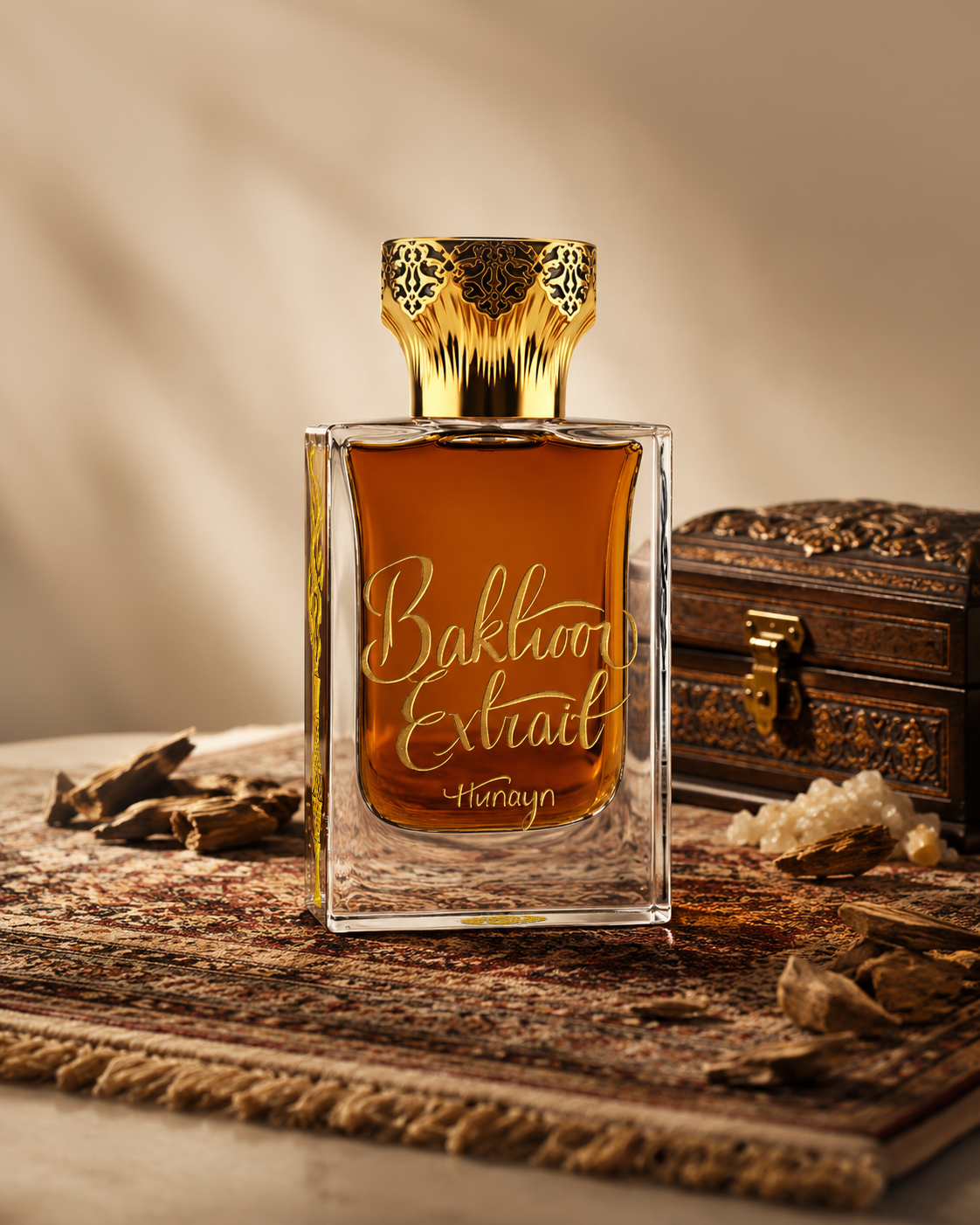
Bakhoor Extrait

Sale price$300.00

The fire is already out. What arrives is what was left behind.

Bakhoor, ground to dust, macerated into hindi oud. Camphor on one side of it. Aged vanilla on the other. The oud holds the middle, and it can hold it because it is already both, camphoraceous at first and animal underneath.

Cold and sweet never resolve into each other here. They are held apart for as long as the perfume lasts.

Beneath them the traditional floor of bakhoor: emirati saffron bakhoor, castoreum, shamama, labdanum, oakmoss, rose, myrtle, patchouli.

Bakhoor Extrait. The second reading of the same material. The first was cold citrus, and the smoke lifted away from it. This one has nothing to lift from.

The bakhoor was never the smoke. It was what the wood was soaked in before it was lit.

A Journey To Inspiration

My mother makes a bakhoor. She has made the same one for as long as I can remember, and she makes it for herself. She is the reason perfumery happened to me at all, and the reason Hunayn exists. The bakhoor in this bottle is hers. Not a version of it, the same blend.

The idea behind both bakhoor perfumes was simple: take bakhoor and put it into a bottle.

Last year's Bakhoor Cologne did it one way. Chips and ground frankincense macerated directly into cold pressed bergamot and grapefruit, and the perfume built outward from that maceration. The intention was a fresh bakhoor, incense smoke arriving cold.

The Extrait uses the same method and goes the other way. The dust is macerated into hindi oud, with vanilla and camphor beside it, and a tincture of the same bakhoor carries the whole composition. Here the bakhoor is both the subject and the solvent.

The contrast is not in the accord. It is in what the smoke was dissolved into. Cold pressed peel oil is gone within the hour. Hindi oud is still on the shirt a week later. Camphor does the work the bergamot did and does it from the other side, because citrus cools by lifting and camphor cools by numbing. The same argument, the opposite pole.

The vanilla is aged, which makes it phenolic and leathery rather than sweet. So the sweet side is already burnt before the oud reaches it, and the opposition is not sweetness against cold. It is two kinds of burning, held apart by a third.

The bakhoor is hers either way. That much I did not compose.