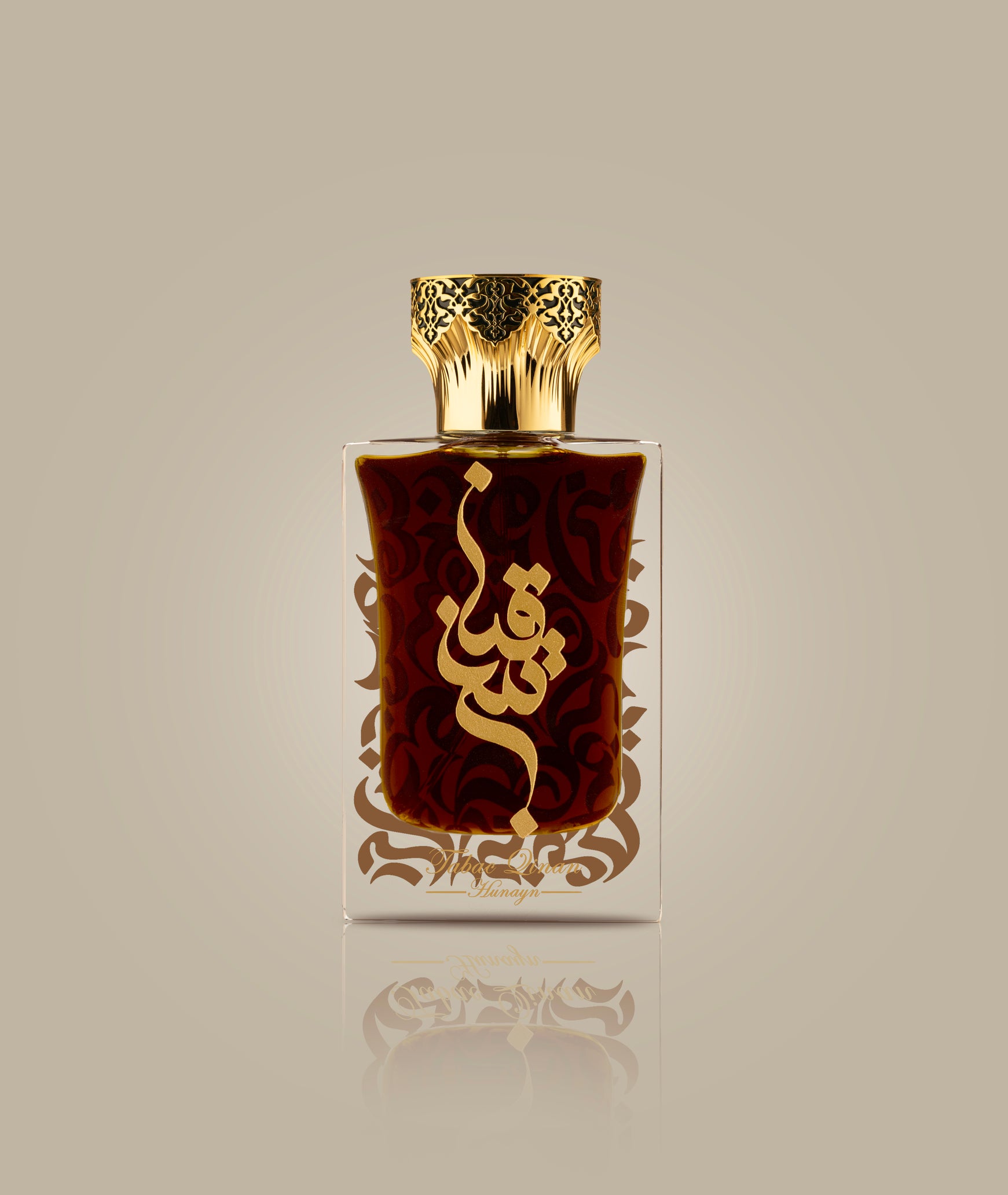
Tabac Qinan started with a simple curiosity: how do you capture the soul of tobacco without ever touching the idea of smoke? Tobacco has been part of human life for centuries, traded, gifted, carried across oceans, used in rituals, and woven into gatherings and conversation. I wanted to capture that atmosphere, the warmth and depth behind tobacco, rather than the burning leaf itself.
The turning point came when I brought Chinese green and black kinam into the formula. Kinam has a quiet gravity to it, a presence that immediately shifts a blend into something deeper and more grounded. With tobacco, it felt natural. It added maturity, calm strength, and the feeling of something rooted in history.
From there, the composition grew organically.
Spices like saffron, nutmeg, anis, and black cumin gave the perfume texture and heat. Three roses: Taifi, Bulgarian, and Malaysian, added refinement and kept the fragrance from becoming heavy. Tangerine, neroli, juniper berry, and black pepper provided a bright opening that slowly sinks into the richer notes below. The tobacco accord itself was built using Virginian tobacco, dhokha, tobacco absolute, and a silk accord, softened with a touch of raspberry for balance.
The woods and resins came last: sandalwood, patchouli, jade wood, frankincense, Sichuan cypress, and of course, the two kinams. These shaped the drydown into something warm, earthy, and polished.
Tabac Qinan became a multi-layered interpretation of tobacco that feels familiar yet entirely new. It’s about depth, warmth, and presence, not smoke. It’s a portrait of tobacco through memory, trade routes, ritual, and the quiet dignity of the material itself.