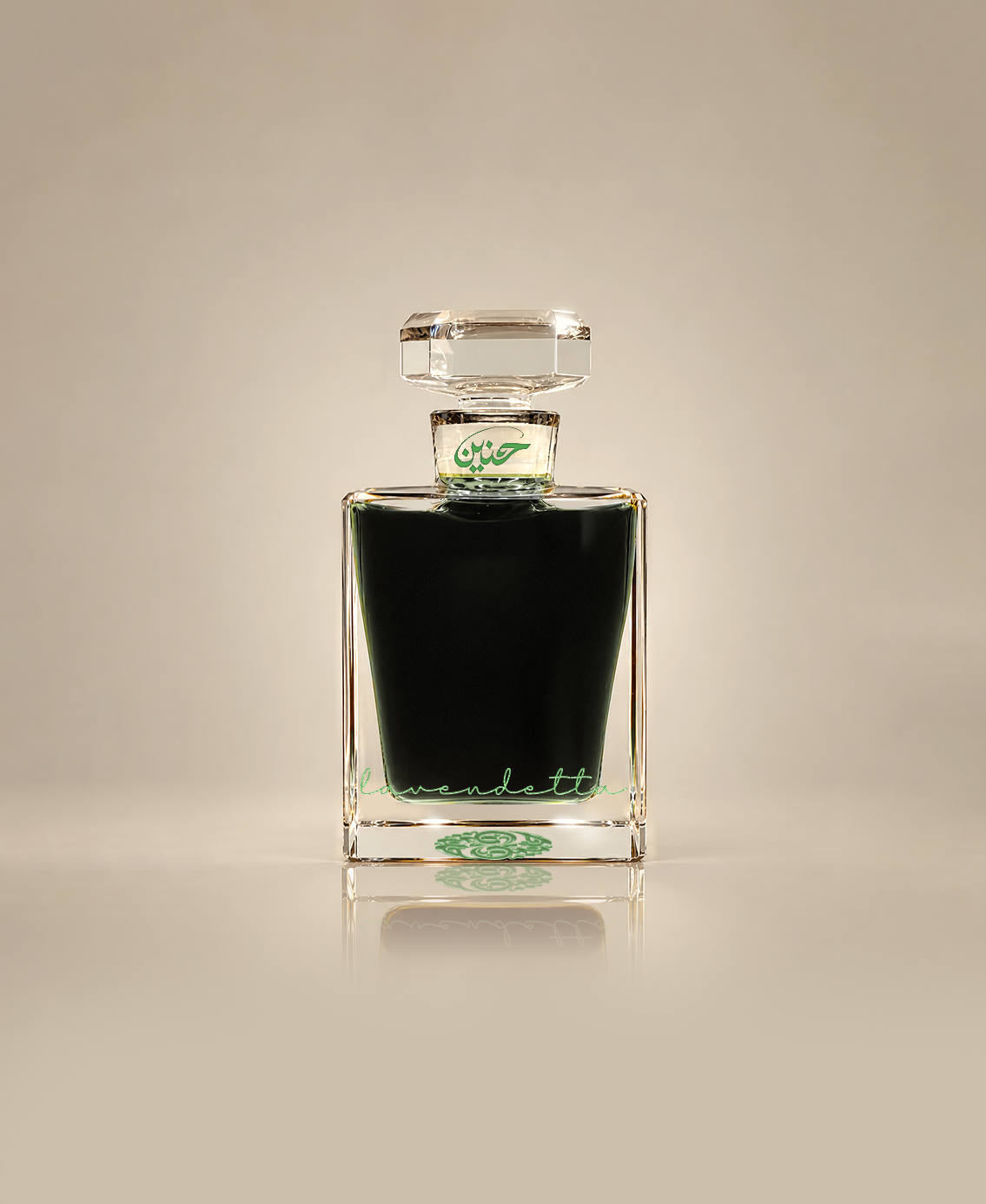
It started with the colour. The malino came out of the still green in a way oud is not usually green, and the first thing it brought to mind was lavender, which is a foolish way to begin. Colour and smell have no necessary relation. A green oil is not obliged to smell of anything green, and building a composition on a visual resemblance is not reasoning, it is association. I went with it anyway, and only afterwards found an argument for it.
The argument was the fougère. Lavender is the top of that structure and has been since 1882, which makes it one of the most heavily used materials in Western perfumery and almost absent from the oud tradition. Two enormous bodies of work, each with its own canonical materials, and lavender sits squarely in one and nowhere in the other. There is no technical reason for that. It is historical accident hardening into convention.
So the question became what lavender is actually doing in a fougère, and whether an oud could be made to do the rest of the job.
This is where it gets harder than I expected. The fougère is lavender, oakmoss and coumarin, and coumarin is a synthetic isolate. The accord does not exist before 1868. A line that works only in naturals cannot build a fougère, and I was not trying to. What is in this bottle takes the top of that structure and puts the oud where the coumarin should be, which means it is not a fougère with oud in it. It is a fougère with its middle removed and something older standing in the gap.
Whether the oud is doing coumarin’s work or doing something else entirely, I cannot say. The green malino holds the lavender in a way nothing else I have tried does, and chamomile sits between them without being asked to mediate. That much is observable. The rest is a claim I am not yet able to support.
The name is what happens when the two halves of this refuse to settle.